Prenatal Hydronephrosis
Prenatal Hydronephrosis
- When the baby's renal pelvis (the part of the kidney where urine is collected) in the womb is found to be wider than normal, it is called prenatal hydronephrosis. Göztepe Pediatric Surgery Clinic, together with the pediatric nephrology department, successfully monitors and treats these babies. Questions you wonder about this subject:
- At what stage of pregnancy can hydronephrosis be detected? The baby's kidneys in the womb are 10-12 years old. Starts producing urine in a week. Enlargement of the kidneys can be detected after the 4th month.
- Does hydronephrosis pose a serious risk for my baby in the womb? Most of the time, no risky situation occurs in the womb. However, if the obstruction in the urinary tract affects both kidneys and is very serious, the growth and development of the baby may be affected as a result of decreased urine flow and amniotic fluid. In this case, your baby will be closely monitored and, if necessary, an intervention can be planned in the womb.
- Can I have a normal birth if my baby has hydronephrosis? Having hydronephrosis in your baby does not affect the way of birth. If there is no other reason that will affect your delivery method, you can have a normal birth.
- Does detecting hydronephrosis in my baby mean that my other babies will also have hydronephrosis? No, familial transmission has not been detected.
- What awaits me after birth?
- -In many babies diagnosed with hydronephrosis in the womb, hydronephrosis may spontaneously regress after birth and may not be detected in the ultrasonography performed on the 3rd day after birth.
- -On the 3rd and 20th days after birth, Patients with mild or moderate hydronephrosis detected in follow-up ultrasonography performed daily are followed up with preventive antibiotic treatment, if necessary, and are examined for differential diagnosis. Kidney functions are usually not affected in these babies. Surgical treatment may be required in up to 25% of cases.
- – In patients with advanced hydronephrosis, their kidney functions are most likely affected and 75% of them may require surgical treatment. The experienced team of Göztepe pediatric surgery performs these surgeries successfully.
- WHAT ARE THE CAUSES OF HYDRONEPHROSIS?
- There are two main reasons that cause kidney enlargement:
- Enlargement of the kidneys due to the reflux of urine from the urinary bladder to the kidneys (See vesicoureteral reflux)(link)
- Enlargement of the kidneys due to obstruction anywhere in the urinary tract. Obstruction areas:
- -Uretero-pelvic junction stenosis: There is stenosis at the exit of the renal pelvis, where the pelvis meets the ureter (the urinary tract that carries urine from the kidney to the bladder).
- -Uretero-vesical junction stenosis: There is stenosis where the ureter enters the bladder. In this case, there is enlargement of both the ureter and the renal pelvis.
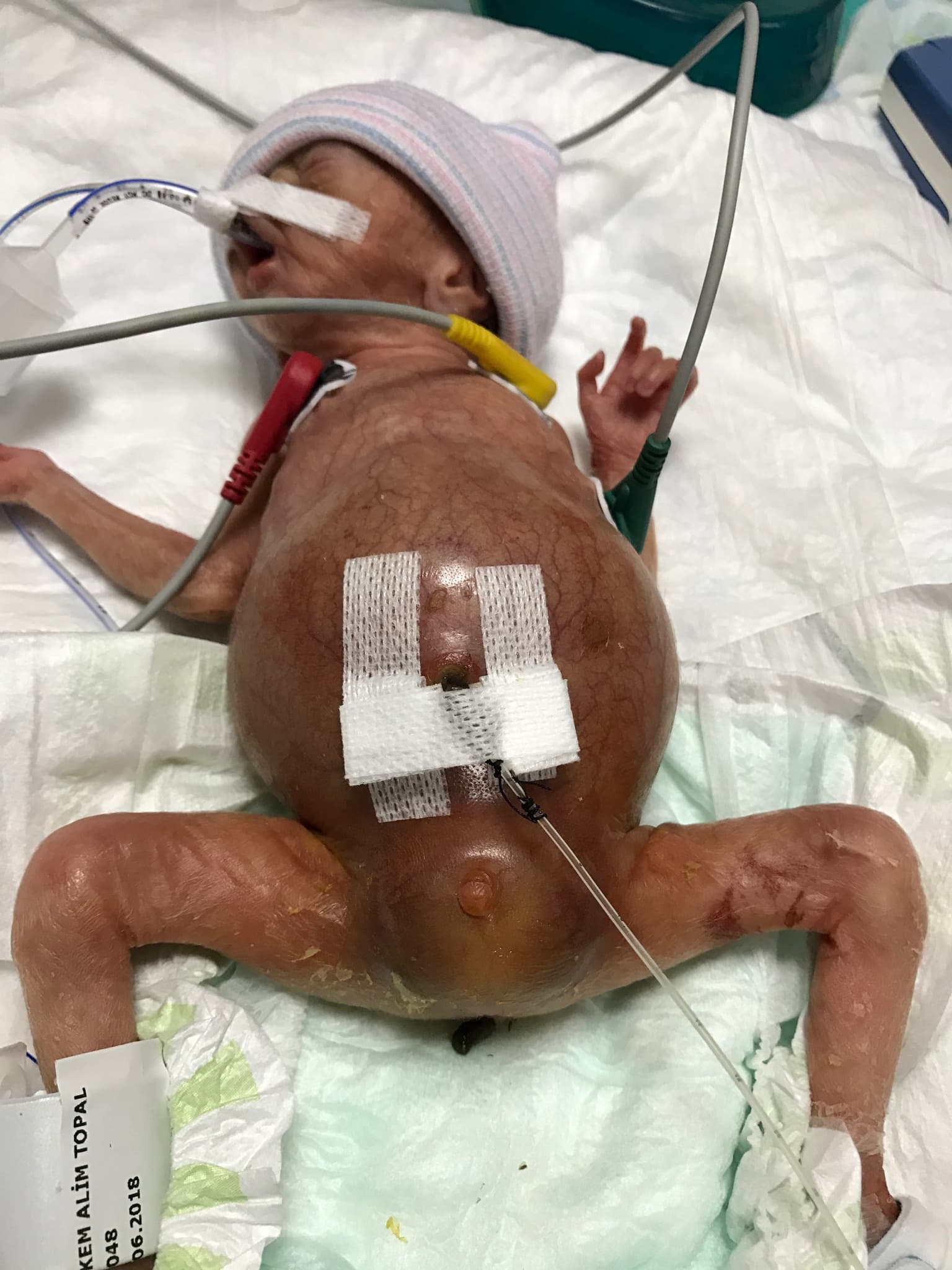
- -Posterior urethral valve (PUV): There are leaflets in the urethra (the urinary tract that opens to the outside after the bladder) that prevent the flow of urine. Bilateral vesicoureteral reflux is usually present with PUV. In patients with PUV, enlargement may be seen both in the upper part of the affected urethra, in the bladder and ureters, and in the renal pelvis.
- -If hydronephrosis continues in postnatal ultrasounds in babies with hydronephrosis in the womb, further examinations are performed to determine the underlying cause.
- -Babies without prenatal diagnosis should also be investigated for problems in the urinary tract if recurrent urinary tract infections are detected, with or without fever. It can be difficult to diagnose young babies. Sometimes the only symptom of a urinary tract infection is fever. For this reason, babies with fever of unknown cause should be investigated for urinary tract infection.
- -Older children may experience complaints such as pain during urination, burning, changes in urine color, abdominal pain, side pain, nausea and vomiting, which are signs of urinary tract infection. If your child has more than 2 recurrent urinary tract infections, they should be investigated for the causes of hydronephrosis. Techniques such as ultrasonography, medicated films and scintigraphy are used in diagnosis.
- -Ureteropelvic junction stenosis: If frequent urinary tract infections and decrease in kidney functions are not detected during follow-up, patients can continue to be followed without surgery, depending on the degree of obstruction.
- -Uretero-vesical junction stenosis: There is usually serious obstruction and severe enlargement of the kidneys. When patients reach the appropriate age and their bladder size becomes suitable for surgery, surgery should be performed without waiting.
- -Posterior urethral valve: Since there is enlargement and damage in both kidneys, it should be treated surgically as soon as it is detected.
- Uretero-pelvic junction stenosis: It can be performed by closed or open method. The narrow part of the renal pelvis outlet is usually removed along with a part of the enlarged pelvis, and the ureter and pelvis are stitched back together. Meanwhile, a catheter is placed from the kidney to the bladder. This catheter is removed by cystoscopy (entering the bladder from the external urinary tract with a tube with a camera) 3 weeks after the surgery. A catheter is placed from the external urinary tract to the bladder.
- Uretero-vesical junction stenosis: The urinary bladder is opened and the narrow ureter openings are released and removed. Ureters It is passed through the prepared tunnel and widely stitched back to the bladder. A catheter is placed in the ureter openings and in the bladder.
- Posterior urethral valve: The urethra is entered with a cystoscope and the leaflets in the urethra are cut. If the patient is too small to undergo this procedure, the bladder is connected to the abdominal wall through a small hole to ensure urine flow. The surgery is completed by placing a catheter into the urethra or the area where the bladder meets the abdomen.
- All of these surgeries are performed successfully by the Göztepe Pediatric Surgery team.
- -Uretero-pelvic stenosis: After the surgery, the patient is followed up in the pediatric surgery service. The urinary catheter is removed within 24-48 hours. The patient, who is on full nutrition and has no additional problems, is explained to the care recommendations and called to Göztepe pediatric surgery and pediatric nephrology check-ups and discharged.
- -Uretero-vesical stenosis: The patient is taken to the pediatric surgery service and monitored. Within 7-10 days, the catheters in the ureters and then in the bladder are removed. Göztepe pediatric surgery and pediatric nephrology He/she is called for outpatient clinic checks and discharged.
- -Posterior urethral valve: The patient is taken to the pediatric surgery service after the surgery and the inserted catheter is removed within 24-48 hours. Since permanent bladder dysfunction may develop due to the posterior urethral valve, it may be necessary to perform clean intermittent catheterization (TAC) to drain the urine after removing the soda. After the patient is taught how to perform TAC, care recommendations are explained and he is called to Göztepe pediatric surgery and pediatric nephrology outpatient clinics for a check-up and discharged. Patients with PUV usually have vesico-ureteral reflux disease and may need a second surgery for this.
- -Uretero-pelvic junction stenosis:
- Swelling may be observed in the surgery area after the surgery. This situation is temporary.
- Bleeding or blood accumulation (hematoma) may occur in the surgery area.
- The surgery area may become infected (germs).
- A hernia may develop from the surgery site.
- The patient may continue to have a urinary tract infection.
- Stenosis may develop again in the uretero-pelvic region.
- Although there is no stenosis in the uretero-pelvic junction, problems may occur in urine flow.
- -Uretero-vesical junction stenosis: Swelling may be observed in the surgical area after the surgery. This situation is temporary.
- Bleeding or blood accumulation (hematoma) may occur in the surgery area.
- The surgery area may become infected (germs).
- A hernia may develop from the surgery site.
- The patient may continue to have a urinary tract infection.
- Postoperative stenosis may develop in the uretero-vesical region and re-operation may be required.
İlgili dökümanlar
PDF dökümanı(PDF)
PDF önizleme
PDF dökümanı(PDF)
PDF önizleme
PDF dökümanı(PDF)
PDF önizleme